素材包 · 2026-10-15
内容素材包 · 2026-10-15
基于 arr.club 当日 published signals(17 条),ready-to-copy,John 过目即发。
生成时间:2026-10-16 08:00(北京时间)
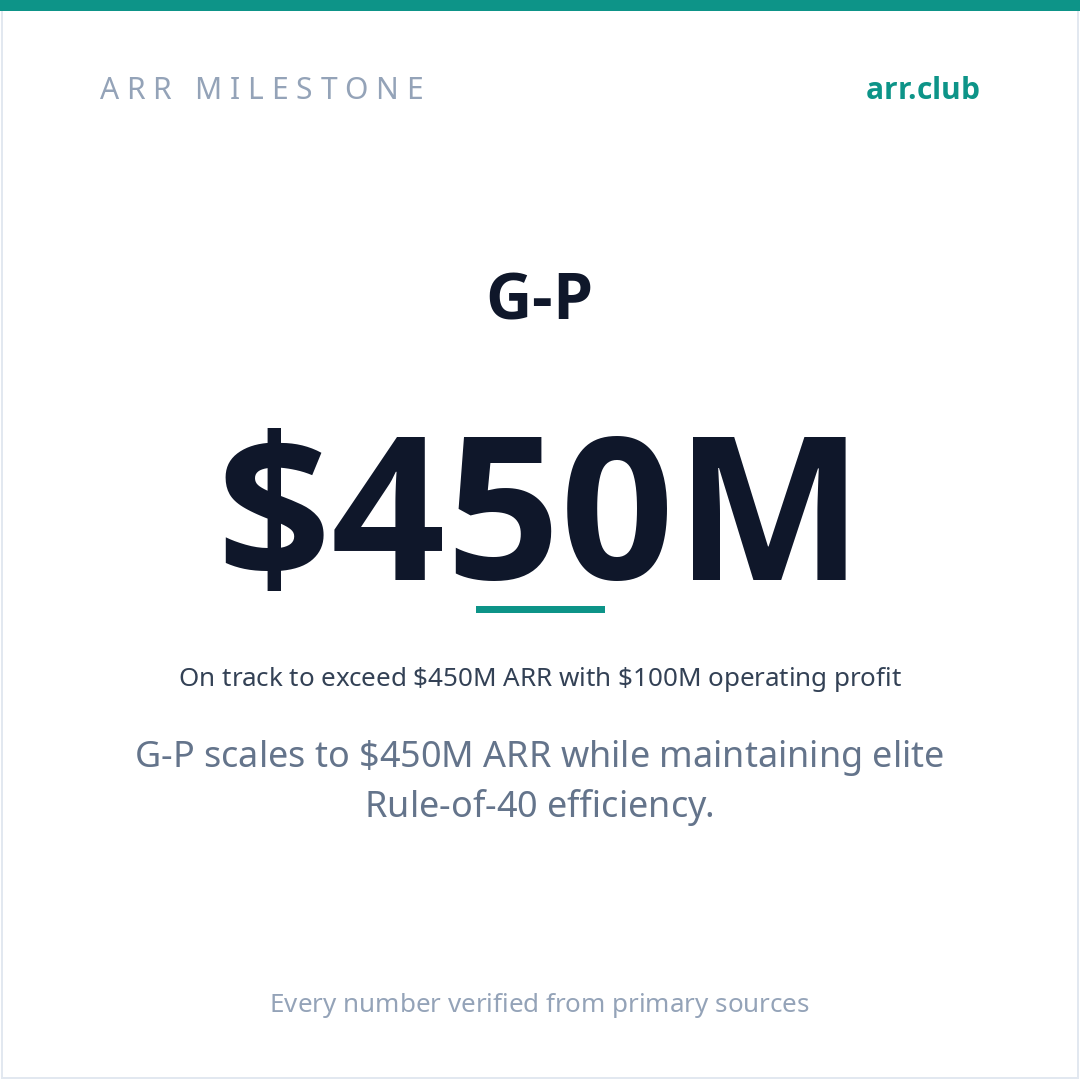
G-P — G-P on track to exceed $450M ARR with $100M operating profit
- ARR:$450M
- 来源:https://smb.theleesvilleleader.com/article/G-P-Reports-Strong-Performance-and-Accelerating-Q3-2026-Momentum-On-Track-to-Exceed-dollar450M-ARR-and-dollar100M-Core-Operating-Profits-in-2026/6ad0c11b129730098884c5c0
X(≤280 字符)
G-P is the rare profitable compounder in HR tech. They announced they are on track to exceed $450M ARR by year-end 2026 with $100M in core operating profits. Scaling revenue and customers by over 20% while hitting Rule-of-40 efficiency is elite.

Tracked live at arr.club
字符数:271
G-P reached a significant inflection point, announcing it is on track to exceed **$450M** ARR by year-end **2026**. This milestone matters because it proves that a massive, compliance-heavy global infrastructure can achieve elite Rule-of-40 efficiency while scaling.

I view G-P as the definitive profitable compounder in the HR tech space. While many AI-native startups struggle to bridge the gap between hype and unit economics, G-P is layering agentic AI over **14+** years of proprietary data across **180+** countries. This is how you build a durable category consolidator.

Here is why this performance stands out:

1. Profitability at scale: The company projected **$100M** in core operating profits, a rare feat for a platform of this size.
2. Sustainable growth: Revenue and customer counts grew more than **20%** versus FY**2025**, demonstrating that their core EOR and contractor products remain essential.
3. Strategic leverage: By embedding their Gia AI agent into major HCM and HRIS platforms, they are shifting from a standalone tool to an ubiquitous infrastructure layer.

The combination of record profitability and sustained growth suggests that the market for global employment is maturing, and G-P is capturing the lion's share of that value. I track verified ARR milestones like this daily at arr.club.
数据卡片
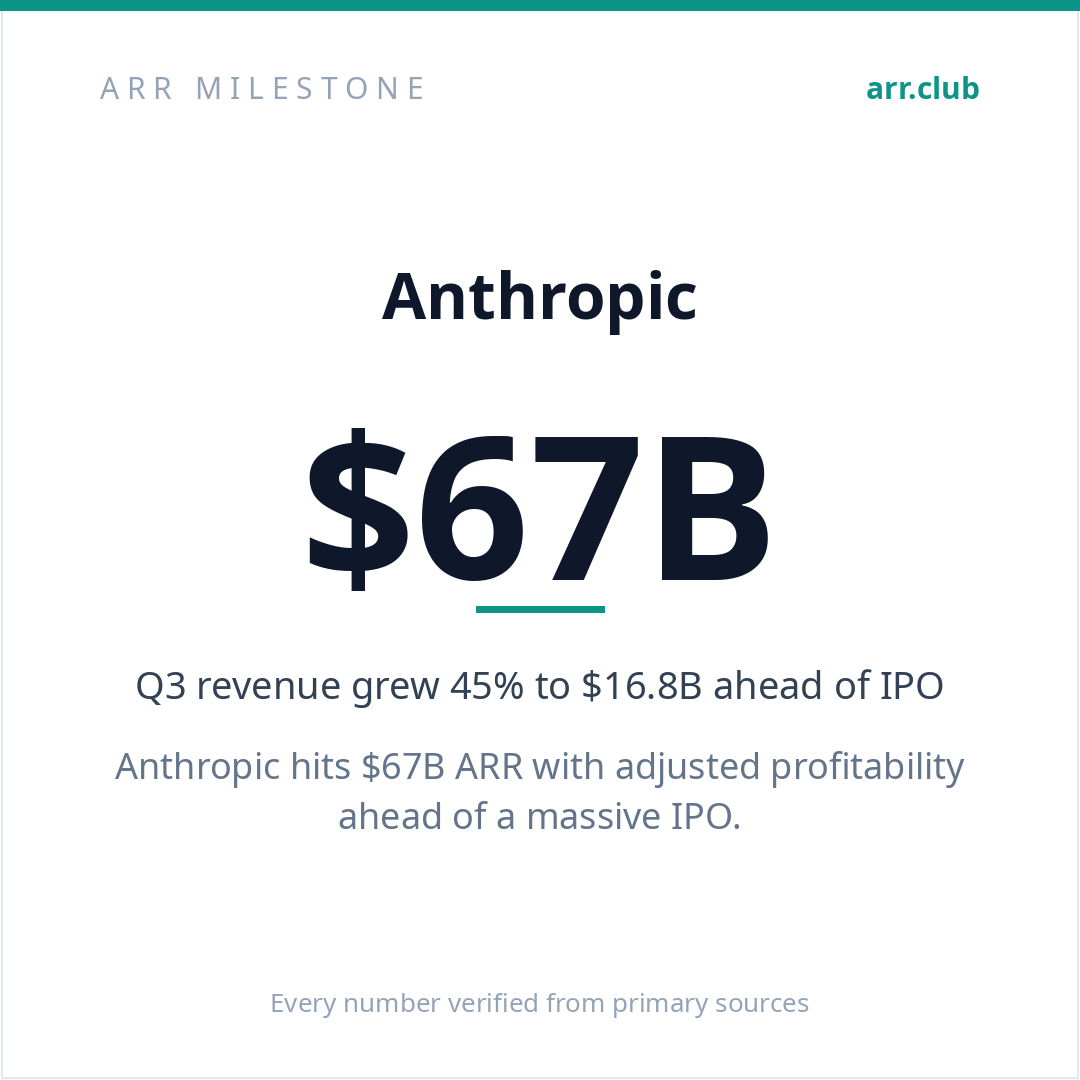
Anthropic — Anthropic Q3 revenue grew 45% to $16.8B ahead of IPO
- ARR:$67B
- 来源:https://www.cxodigitalpulse.com/anthropic-reports-45-quarterly-revenue-growth-to-16-8-billion-ahead-of-expected-ipo/
X(≤280 字符)
Anthropic is the first mega-cap AI IPO.

Q3 revenue reached $16.8B, up 45% from $11.6B in Q2. It grew from $4.7B in Q1. The company hit adjusted profitability while targeting a $2T+ valuation.

Scale and efficiency are winning.

Tracked live at arr.club
字符数:253
Anthropic reached a massive **$67 billion** ARR run rate in Q3 2026, signaling that the era of AI mega-cap IPOs has officially arrived. Seeing a company scale to **$16.8 billion** in quarterly revenue while achieving adjusted profitability is a rare feat in a sector defined by heavy infrastructure spend.

This performance validates the shift from pure experimentation to sustainable, high-scale enterprise utility. The trajectory is undeniable: revenue grew from **$4.7 billion** in Q1 to **$11.6 billion** in Q2, and finally **$16.8 billion** in Q3, representing a **45%** quarter-over-quarter increase.

Here is why this matters for the broader AI market:

1. Profitability at scale is the new benchmark. By achieving adjusted profitability despite a **$518 billion** commitment to cloud and compute, Anthropic has set a high bar for capital efficiency.
2. The IPO window is opening for the giants. Targeting a valuation above **$2 trillion** suggests that the public markets are expected to absorb AI infrastructure plays at a scale previously reserved for legacy tech.
3. Growth is compounding rapidly. After growing **twelvefold** to **$4.6 billion** in 2025, the company is now on a path that analysts estimate could reach **$110 billion** in annual revenue run rate by the end of 2026.

Anthropic is positioning itself to lead the next wave of public market liquidity. I track verified ARR milestones like this daily at arr.club.
数据卡片
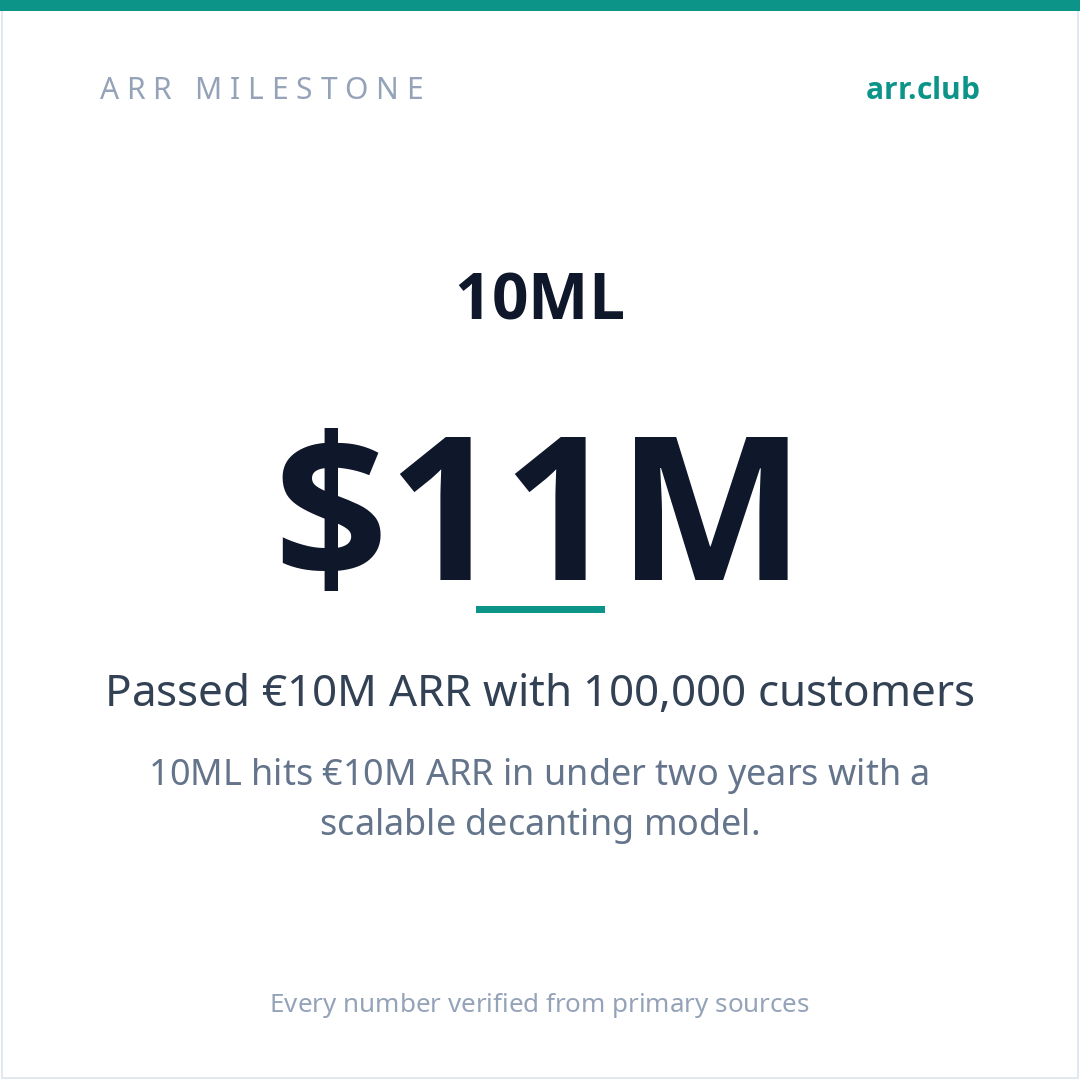
10ML — 10ML passed €10M ARR with 100,000 customers
- ARR:$11M
- 来源:https://www.manilatimes.net/2026/10/14/tmt-newswire/globenewswire/10ml-reaches-10m-arr-and-100000-customers-commits-35-million-to-become-europes-largest-perfume-retailer/2445524
X(≤280 字符)
10ML reached €10M annual run rate with 100,000 customers in under 2 years.

Decanting authentic perfume is a brilliant wedge against traditional retail. They are now committing €35M to scale across Europe.

Tracked live at arr.club
字符数:231
10ML reached **€10 million** in annual run rate with **100,000** customers in under **two** years. This is a masterclass in using a product wedge to disrupt a legacy category.

By focusing on decanting—selling authentic fragrances in smaller sizes—they bypassed the high barrier to entry of full-bottle luxury retail. They aren't just selling perfume; they are building a data-driven moat. Their commitment of **€35 million** toward AI and European expansion signals they are moving from a niche retailer to a dominant platform.

Here is why this model works:

1. The decanting wedge lowers the customer acquisition cost by making luxury accessible, allowing them to scale to **100,000** users in less than **two** years.
2. They turned transparency into a marketing engine. By publishing research showing price discrepancies of up to **27.9%** across the EU, they built trust that traditional retailers lack.
3. The **€35 million** investment into AI-driven inventory management creates a defensible operational advantage that is difficult for incumbents to replicate.

Most e-commerce plays struggle with unit economics, but 10ML’s ability to scale to **€10 million** while maintaining a content-and-data flywheel is a rare signal of efficiency. I track verified ARR milestones like this daily at arr.club.
数据卡片
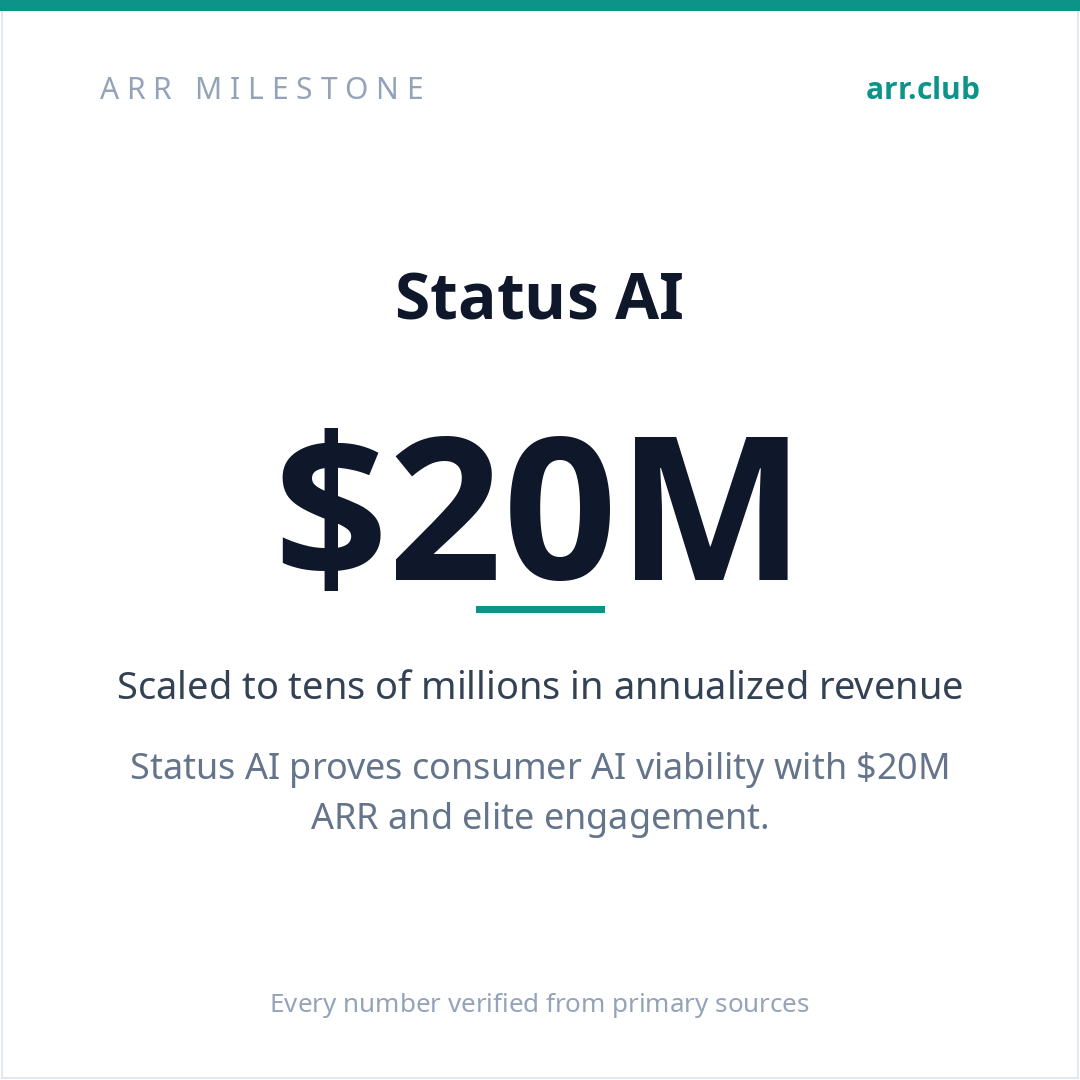
Status AI — Status AI scaled to tens of millions in annualized revenue
- ARR:$20M
- 来源:https://x.com/faionur/status/2110422771280826562
X(≤280 字符)
Status AI reached $20M in annualized revenue.

The team cut AI costs by 95% while maintaining 90+ minutes of daily user engagement. This is the consumer AI playbook: build obsession, then optimize the unit economics to scale.

Tracked live at arr.club
字符数:251
Status AI reached **$20M** in annualized revenue, proving that consumer AI can achieve both massive scale and sustainable unit economics. This milestone is a masterclass in balancing viral engagement with rigorous infrastructure management.

The real signal here isn't just the revenue; it is the operational discipline required to sustain it. By cutting AI costs by **95%** through their partnership with Inworld, the team transformed their unit economics, allowing them to reinvest in the product rather than burning cash on inference.

Here is why this matters:

1. Engagement is the ultimate moat. With users spending over **90** minutes daily in their AI-generated story worlds, Status AI has moved beyond a novelty app into a daily habit.
2. Infrastructure efficiency is a competitive advantage. Reducing costs by **95%** while maintaining quality is what separates long-term winners from those who collapse under their own compute bills.
3. The path to scale is paved with unit economics. Having raised **$17M** in total funding, the company demonstrated that they could leverage capital to build a product that users love, then optimize the backend to make that growth profitable.

Status AI is now one of the most compelling consumer AI stories to emerge from the YC W22 cohort. I track verified ARR milestones like this daily at arr.club.
数据卡片
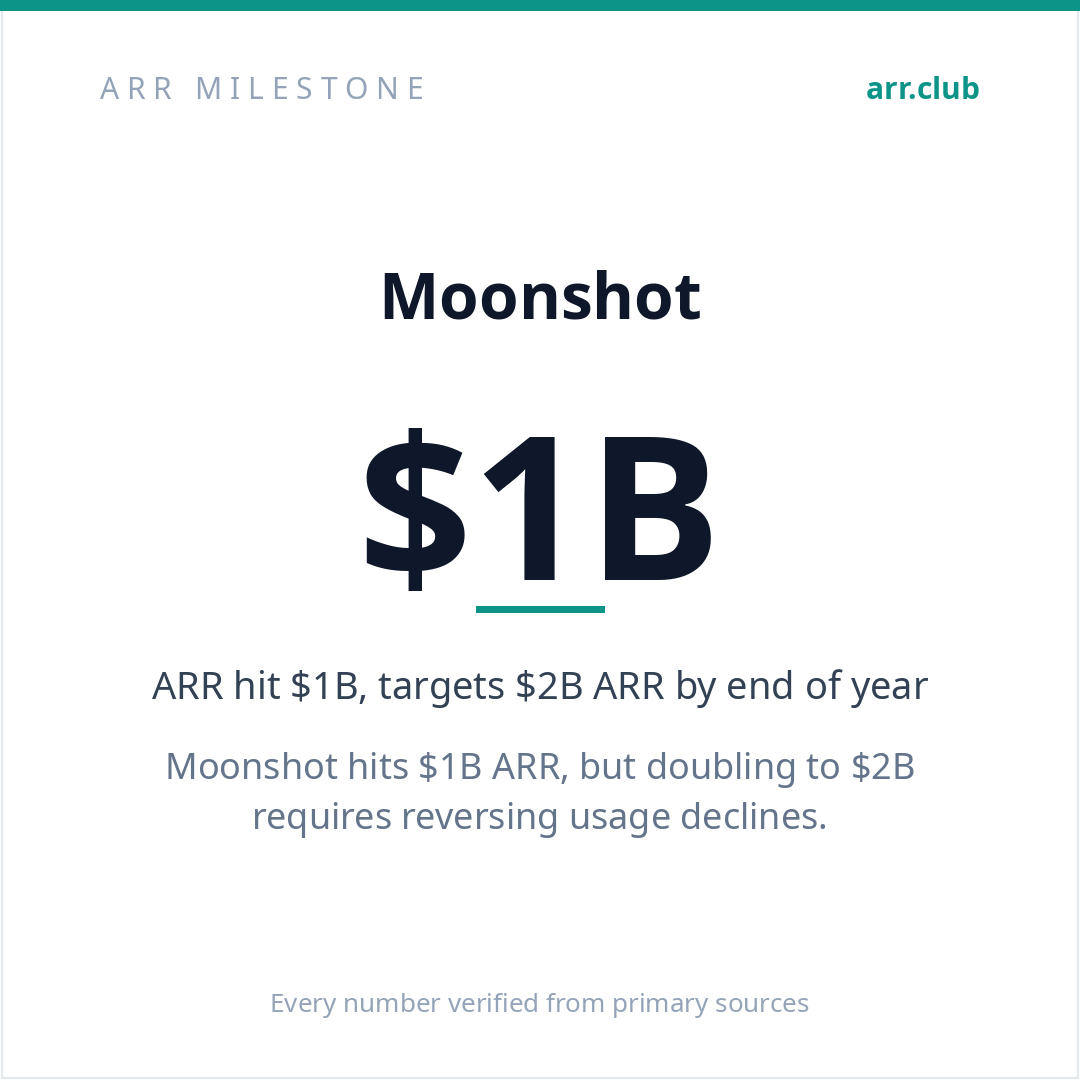
Moonshot — Moonshot ARR hit $1B, targets $2B ARR by end of year
- ARR:$1B
- 来源:https://techcrunch.com/2026/09/11/kimi-maker-moonshot-ai-targets-2-billion-in-annual-revenue/
X(≤280 字符)
Moonshot hit $1B ARR in August.

The AI lab is now targeting $2B in annual revenue by year-end. Scaling to this level requires massive token volume, and their K3 model is still moving 300B tokens daily.

Tracked live at arr.club
字符数:228
Moonshot reached **$1B** in revenue run rate as of August. This milestone marks a critical inflection point for the Chinese AI landscape, proving that high-performance models can scale to massive commercial utility in a compressed timeframe.

The company now targets **$2B** in annualized revenue by the end of the year. While usage fluctuations are inevitable in this sector, the underlying infrastructure demand remains undeniable.

1. The K3 model launch served as the primary catalyst for this growth, driving significant adoption throughout the summer.
2. Despite recent usage declines, the model still sustains a massive volume of **300 billion** tokens generated daily.
3. The path to doubling revenue in just a few months relies on maintaining this high-frequency token throughput across their enterprise base.

Scaling to this level of revenue requires more than just a viral model; it requires deep integration into the workflows of high-volume users. I track verified ARR milestones like this daily at arr.club.
数据卡片
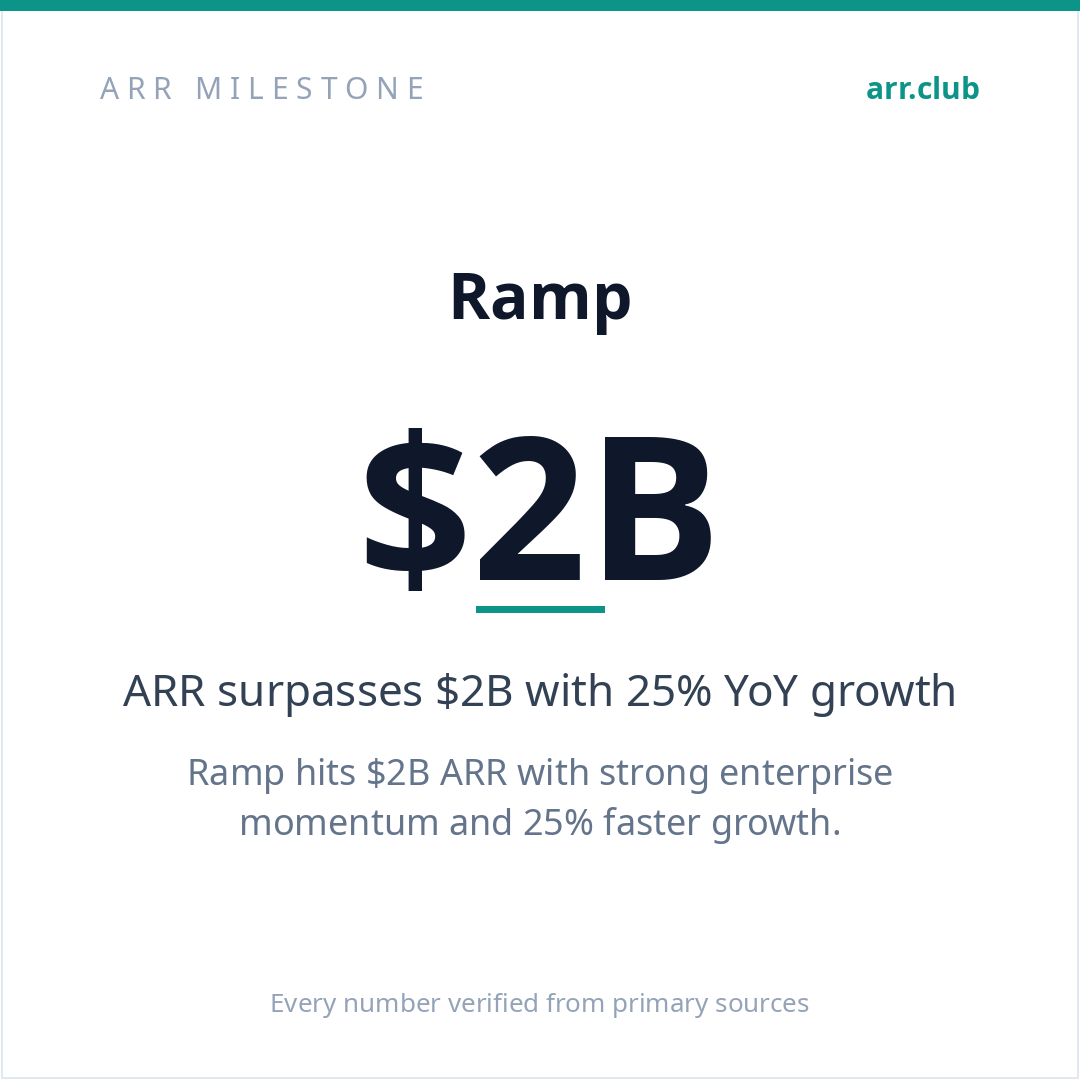
Ramp — Ramp ARR surpasses $2B with 25% YoY growth
- ARR:$2B
- 来源:https://www.prnewswire.com/news-releases/ramp-reaches-60-billion-valuation-as-annualized-revenue-tops-2-billion-302909315.html
X(≤280 字符)
Ramp reached $2B in ARR. It grew 25% faster than the previous year.

The enterprise segment is the real engine, with a 113% YoY increase in customers generating over $100,000 annually. Scale at this speed is rare.

Tracked live at arr.club
字符数:239
(生成失败:ValueError: [linkedin_post] ungrounded numbers persist after retry: $1b, bold:$1b)
数据卡片
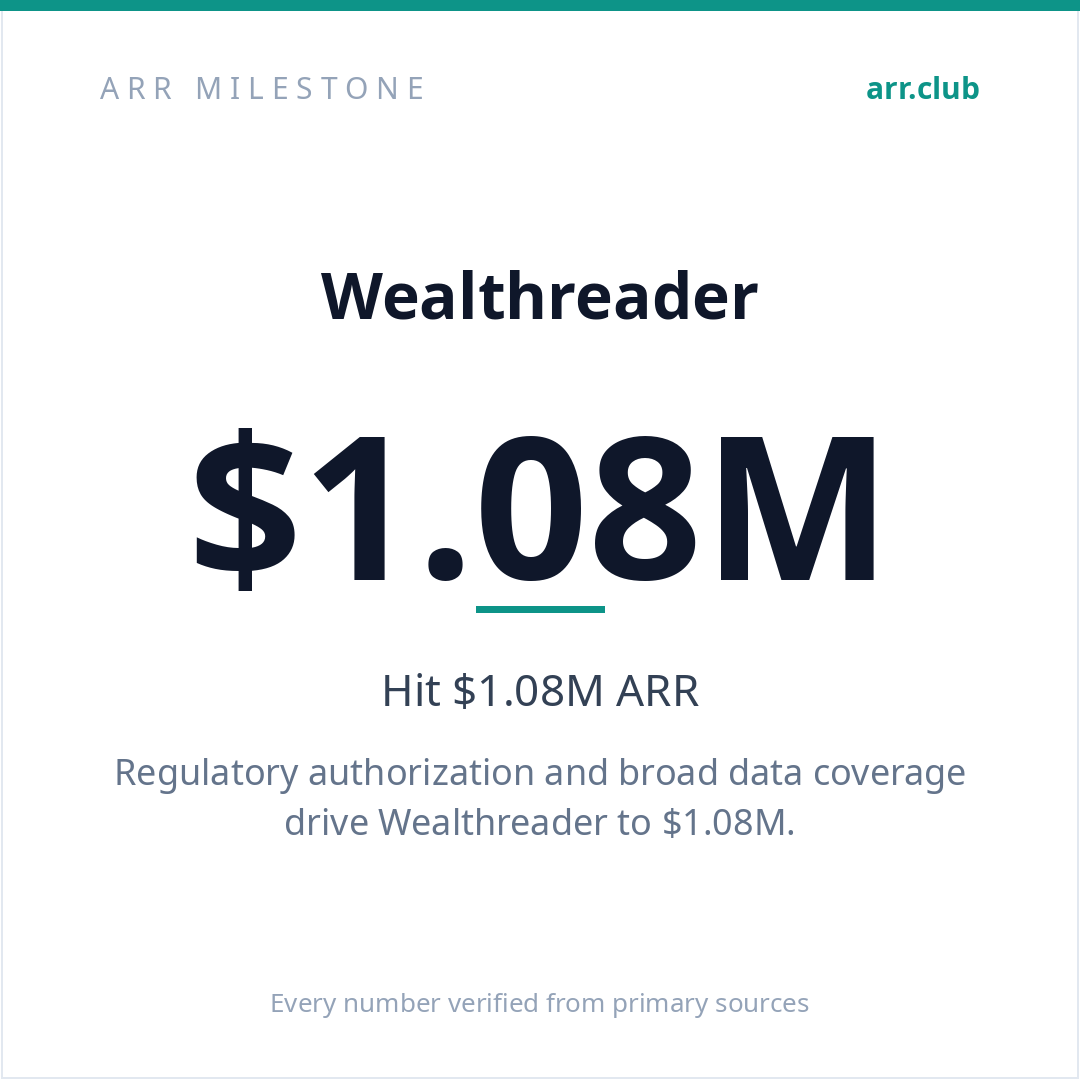
Wealthreader — Wealthreader hit $1.08M ARR
- ARR:$1.08M
- 来源:https://emprendedores.es/startups/wealthreader-y-bleecker-las-dos-startups-espanolas-del-glovo-campus
X(≤280 字符)
Wealthreader hit $1.08M ARR.

Regulatory moats are the ultimate leverage in fintech. By combining PSD2 data with direct banking aggregation, they have built a defensible infrastructure play.

Tracked live at arr.club
字符数:216
Wealthreader just hit **$1.08M** ARR. In the crowded open banking API space, crossing the million-dollar mark is the first real test of whether a product has moved beyond early adopters to genuine market utility.

What makes this milestone significant is the company’s regulatory moat. By securing authorization from the Bank of Spain to provide account information services under PSD2, they have cleared a massive barrier to entry that keeps many competitors sidelined. Their strategy of combining PSD2 data with online banking channel data creates a more comprehensive dataset than pure-play aggregators, which is exactly what enterprise clients demand when building financial products.

Here is why this model is scaling:

1. Regulatory compliance is a feature, not just a cost. Being authorized by the Bank of Spain provides the trust necessary to aggregate data across **250+** banks in **61** countries.
2. The hybrid data approach solves the "completeness" problem. By pulling from both PSD2 and online banking channels, they offer a deeper view of current accounts, cards, investments, and debt.
3. Usage-based pricing starting at **€180**/month creates a low-friction entry point for developers while allowing for significant expansion as their clients’ transaction volumes grow.

Founded in **2022**, Wealthreader has proven that a focused, compliance-first approach can capture significant market share in a short window. I track verified ARR milestones like this daily at arr.club.
数据卡片
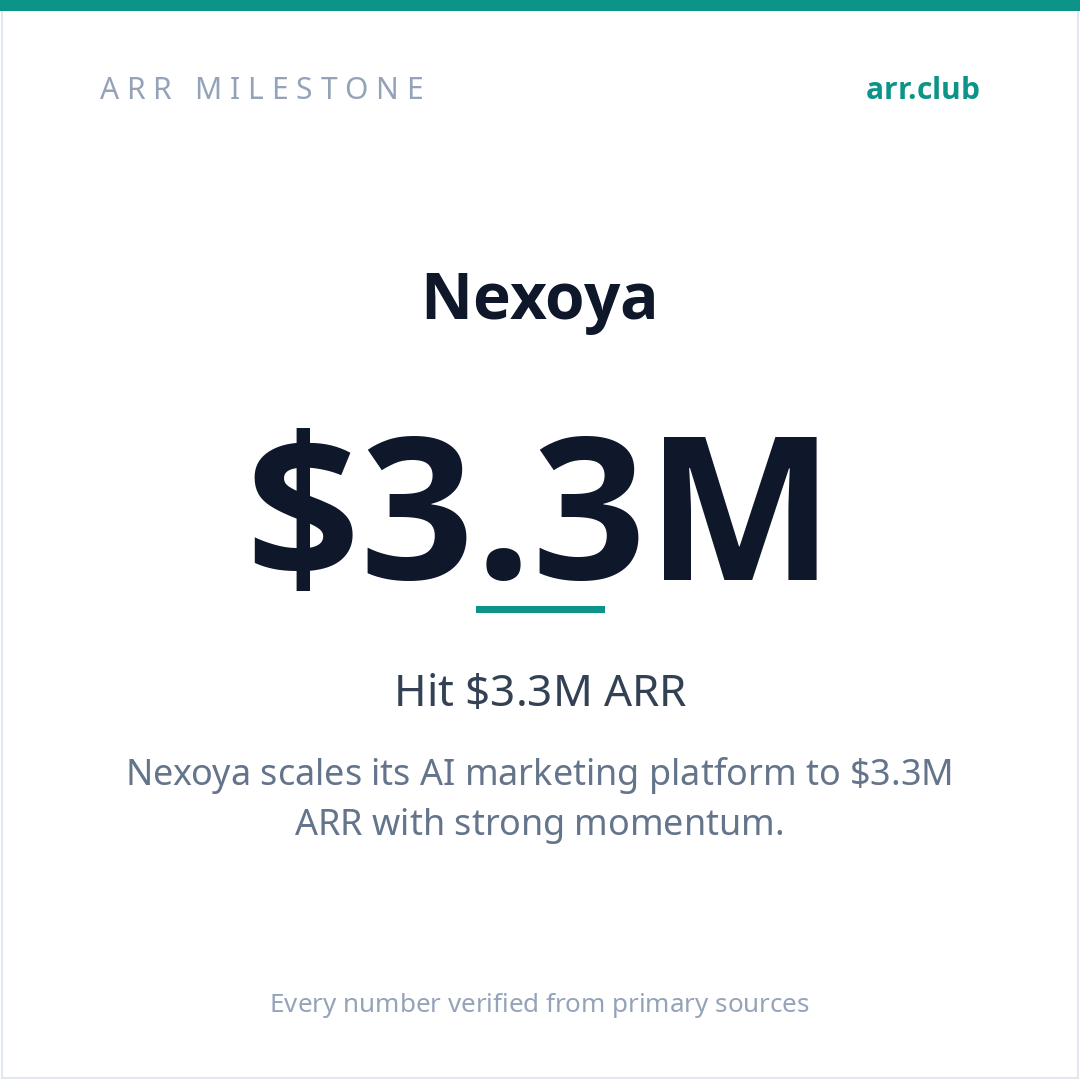
Nexoya — Nexoya hit $3.3M ARR
- ARR:$3.3M
- 来源:https://www.startupticker.ch/en/news/nexoya-nearly-triples-arr-as-enterprise-business-gains-momentum
X(≤280 字符)
Nexoya hit $3.3M ARR.

AI-driven marketing budget automation is winning in the mid-market. Operational leverage is the only metric that matters for these teams.

Tracked live at arr.club
字符数:186
Nexoya reached **$3.3M** ARR this week, proving that AI-driven operational leverage is becoming a non-negotiable for marketing teams. In a crowded analytics market, the companies that win are those that move beyond simple reporting to automated execution.

I’ve watched the shift from "data visualization" to "autonomous optimization" over the last few years, and Nexoya’s growth trajectory confirms that the market is ready for tools that actually move the budget needle.

Here is why this milestone matters:

1. The move toward automated budget allocation across channels like Google, Meta, and TikTok is no longer a luxury; it is a requirement for mid-market teams managing complex spend.
2. By integrating directly with systems like Salesforce, the platform bridges the gap between marketing activity and actual revenue outcomes, creating a much stickier product.
3. Pricing at **€600** per month allows for a repeatable, scalable sales motion that avoids the long, painful enterprise procurement cycles while still capturing significant value.

The most successful SaaS companies I see today are those that stop asking users to look at dashboards and start doing the work for them. Nexoya is clearly executing on that mandate.

I track verified ARR milestones like this daily at arr.club.
数据卡片
AKOOL — AKOOL hit $36M ARR
- ARR:$36M
- 来源:https://x.com/NathanLatka/status/2108233854427222511
X(≤280 字符)
AKOOL hit $36M ARR as of June 2026.

Enterprise generative video is the real wedge. While others chase consumer hype, they built a massive business serving brands like Microsoft and Amazon.

Tracked live at arr.club
字符数:215
AKOOL hit **$36M** ARR as of June 2026. This milestone confirms that the most durable generative AI businesses are currently being built on enterprise utility rather than consumer hype.

I have watched the generative video space evolve from novelty to necessity, and AKOOL’s trajectory proves that global brands prioritize identity preservation and high-fidelity output above all else. By solving for complex requirements like automated video translation and studio-quality face swapping, they have secured a client roster that includes Coca-Cola, Microsoft, Amazon, and Qatar Airways.

Here is why this signal matters:

1. Enterprise adoption is the ultimate validator. While many AI startups struggle to move beyond pilot programs, AKOOL has scaled by integrating directly into the workflows of global marketing teams.
2. Engineering pedigree drives product moats. Founded in **2022** by a former Google and Apple technical lead, the company’s focus on rendering fidelity has allowed them to outpace competitors who prioritize speed over quality.
3. Growth velocity remains the primary indicator of market fit. After ranking first on the Inc. 5000 in **2025**, the company’s ability to sustain this momentum to **$36M** ARR demonstrates a repeatable sales motion that is rare in the current AI landscape.

The shift toward localized video at scale is a massive tailwind for companies that can deliver consistent, high-quality results. I track verified ARR milestones like this daily at arr.club.
数据卡片
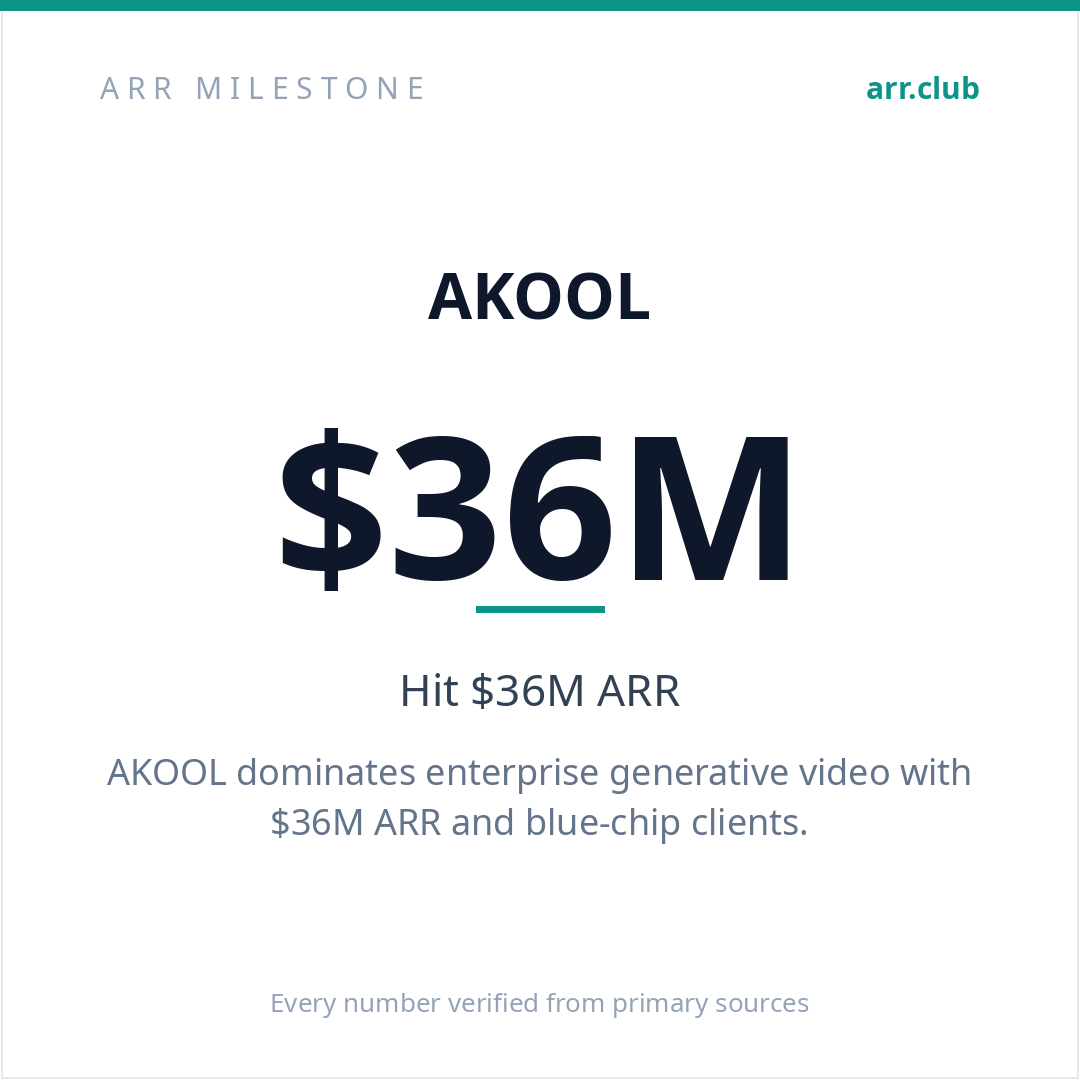
Holo — Holo hit $5M ARR in 252 days with €5M seed raised
- ARR:$5M
- 来源:https://www.linkedin.com/posts/justinas-pasys_ai-startups-venturecapital-share-7516413789001519104-7mdU/
X(≤280 字符)
Holo hit $5M ARR in 252 days with less than €1M raised.

This is the gold standard for capital-efficient AI distribution. They scaled to 20,000 paying businesses by automating marketing for those who could never afford a team.

Tracked live at arr.club
字符数:252
Holo reached **$5M** ARR in just **252** days, proving that capital efficiency is still the ultimate competitive advantage in the AI era. They achieved this scale with less than **€1M** raised before their recent **€5M** seed round, signaling a rare mastery of product-led distribution.

I view this as a masterclass in targeting the underserved SMB market. By automating the entire marketing department for businesses that previously lacked the budget for professional services, they have unlocked a massive, untapped customer base.

Here is why this trajectory matters:

1. Velocity is the best indicator of product-market fit. Reaching **$5M** ARR in under a year suggests their AI-driven marketing engine solved a burning pain point for their **20,000+** paying customers immediately upon launch.
2. The unit economics are exceptional. Scaling to this level with minimal initial capital indicates that their proprietary strategy engine and brand-identity system are driving high-margin, repeatable revenue across **100+** countries.
3. They successfully commoditized complex marketing workflows. By supporting **99+** languages, they built a global product from day one, rather than relying on localized, high-touch sales cycles.

Holo is a clear case study in how to build a high-growth AI company without burning through excessive venture capital. I track verified ARR milestones like this daily at arr.club.
数据卡片
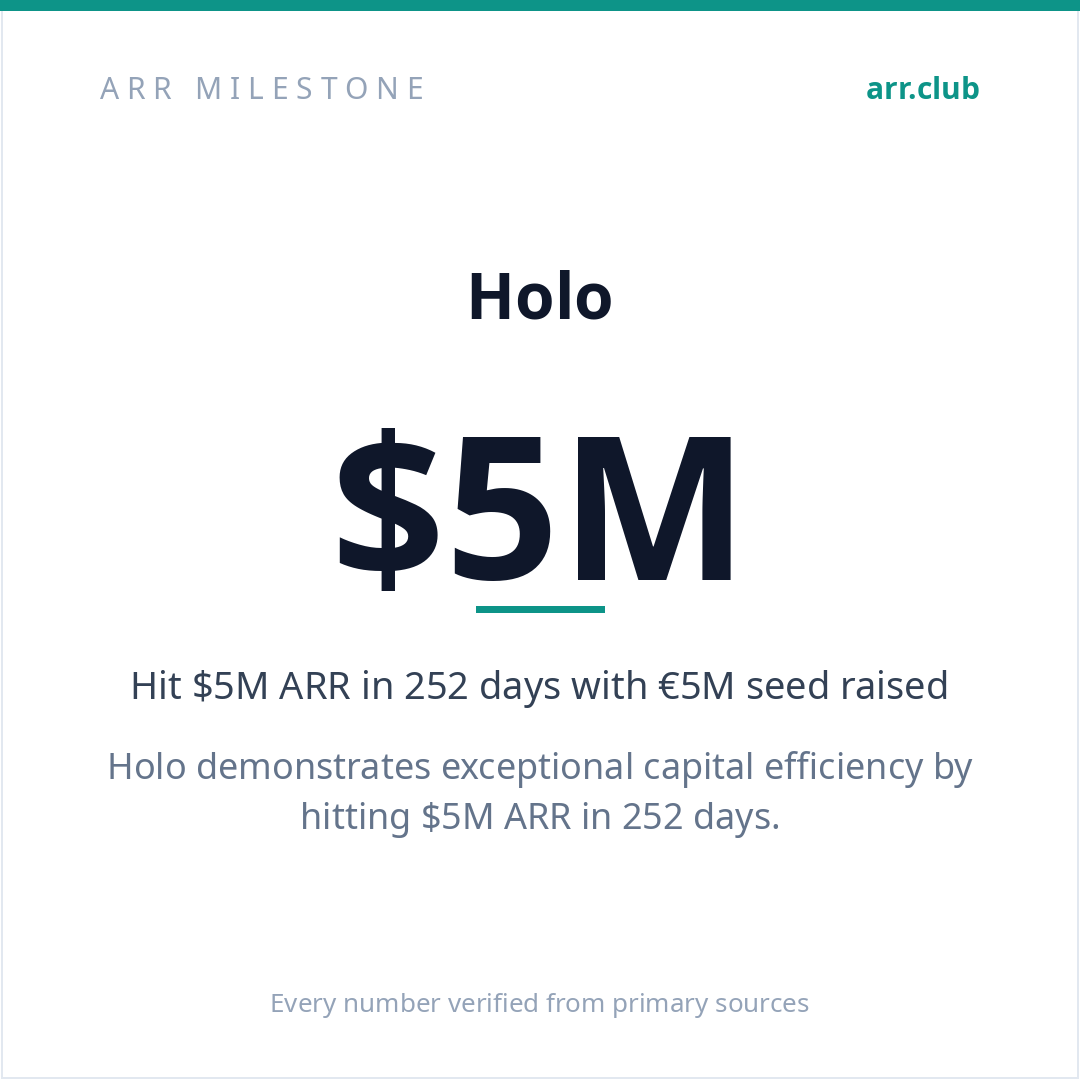
Lexroom — Lexroom grew from €0 to €30M ARR in under two years
- ARR:$32M
- 来源:https://www.linkedin.com/posts/pieterjanbouten_from-0-to-30m-arr-in-less-than-two-years-share-7516110646552199168-hhTG/
X(≤280 字符)
Lexroom reached 30M ARR in under 2 years. This is European legal tech at a scale rarely seen.

They grew from 20M ARR in July 2026 to 30M ARR in just 3 months. Previously, they scaled from 800K to 10M ARR in 1 year.

Tracked live at arr.club
字符数:241
Lexroom just reached **€30M** ARR in less than two years, cementing its status as one of the fastest-growing software companies in Europe. This velocity is rare in legal tech, and it signals a fundamental shift in how the sector is adopting high-scale automation.

I have watched their trajectory closely, and the numbers tell a story of aggressive, disciplined execution. They added **€10M** in net new ARR in just **three** months, jumping from **€20M** in July **2026** to their current milestone. This follows a massive growth phase where they scaled from **€800K** to **€10M** ARR in a single year, supported by a **$50M** Series B raised in May **2026**.

Here is why this matters:

1. Scaling from **15** to over **200** employees while maintaining this growth rate suggests their internal infrastructure is as robust as their product-market fit.
2. The jump from **€20M** to **€30M** in one quarter proves that their expansion is not just a lucky early-stage spike, but a repeatable enterprise motion.
3. European legal tech is finally producing "best-in-class" SaaS stories that rival the top US performers in terms of pure capital efficiency and speed.

The ability to sustain this momentum after crossing the **€10M** threshold is the true test of a category leader. I track verified ARR milestones like this daily at arr.club.
数据卡片
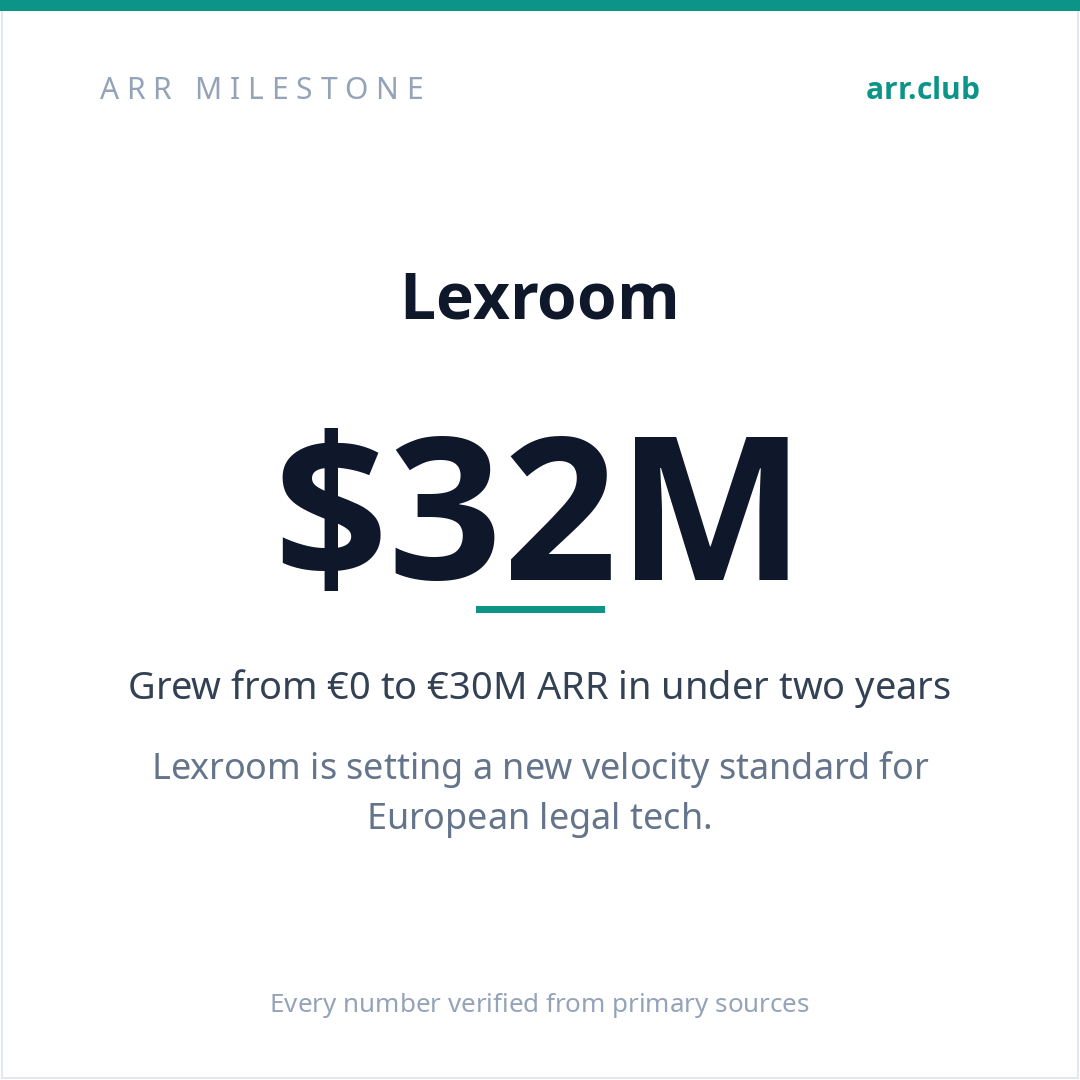
Timeliner — Timeliner grew from $0 to $500K ARR in 7 months
- ARR:$500K
- 来源:https://www.linkedin.com/posts/noam-tryber-b55b46286_0-in-march-when-we-opened-timeliner-to-ugcPost-7516153541175058432-iDVq/
X(≤280 字符)
Timeliner reached $500K ARR in 7 months.

Founder-market fit is the ultimate moat. Noam Tryber lived the agency pain for 5 years before building this. Now he is scaling to 370+ teams with 40%+ MoM growth.

Tracked live at arr.club
字符数:230
Timeliner reached **$500K** ARR in just **7** months, scaling from **$0** at its March **2026** launch to this milestone by October. This is a masterclass in founder-market fit, as the company now serves **370+** teams across **15+** countries.

I see many AI tools built from the outside looking in, but Timeliner is different. Founder Noam Tryber spent **5** years running an agency that produced **700** videos a month. He didn't just build a tool; he built the operating system he desperately needed to solve his own operational bottlenecks.

Here is why this trajectory matters:

1. The "QC for video" thesis is a massive opportunity. As AI makes production **10x** cheaper, the market is flooded with content, creating an urgent need for an automated quality layer that functions like code review.
2. By collapsing a **6**-tool workflow into one, they have achieved high stickiness. Integrating directly with LLMs via API allows them to own the entire production lifecycle rather than just a single step.
3. Growth of **40%+** month-over-month proves that solving the "quality control" problem is a high-priority pain point for professional teams, not just a nice-to-have feature.

When a founder understands the agency pain point this deeply, they don't just build software—they build a necessary infrastructure layer. I track verified ARR milestones like this daily at arr.club.
数据卡片
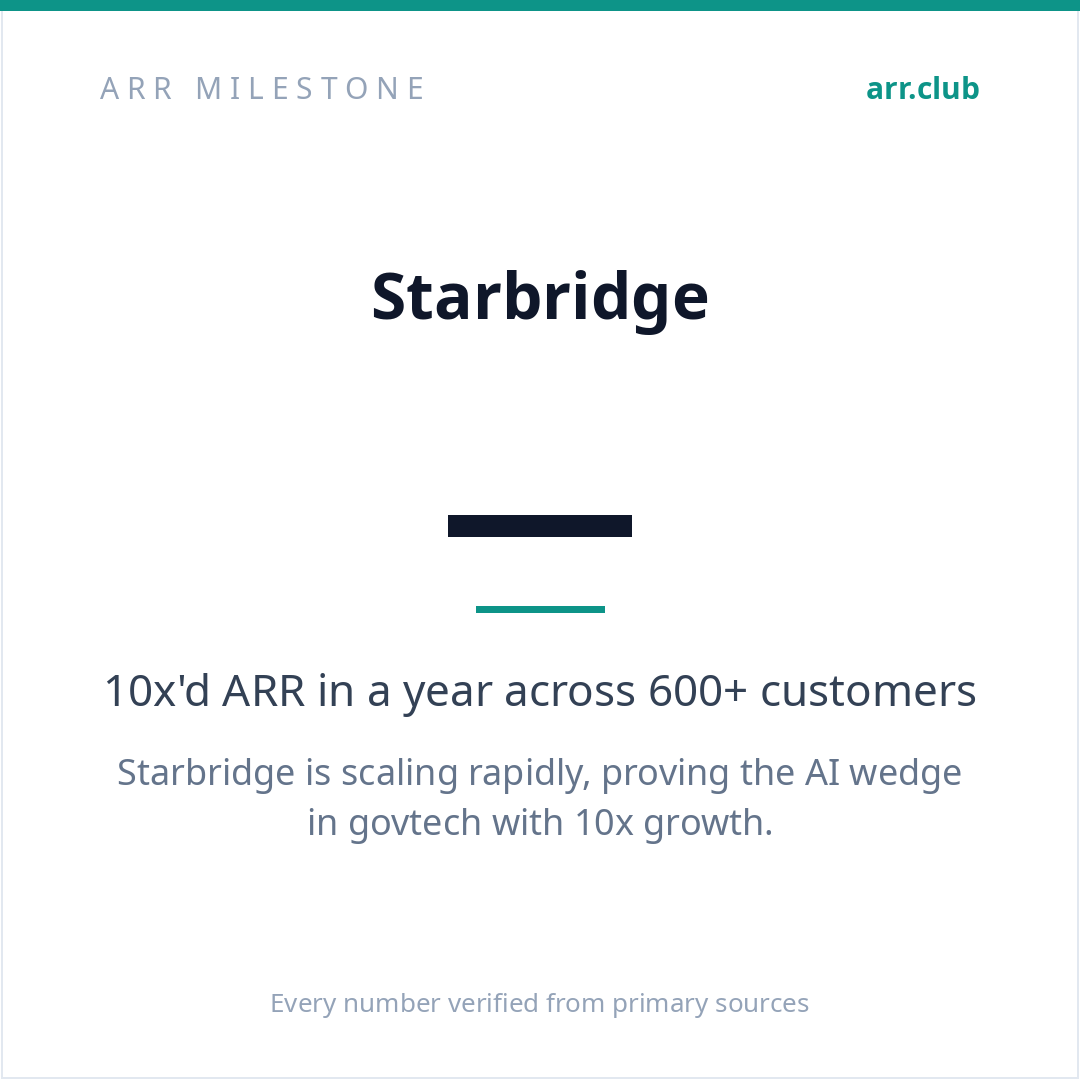
Starbridge — Starbridge 10x'd ARR in a year across 600+ customers
- ARR:(未披露)
- 来源:https://www.linkedin.com/posts/jaime-ruiz-8aa09a1b5_top-60-ai-disruptor-for-2026-huge-shoutout-ugcPost-7516142932316573696-6m2O/
X(≤280 字符)
Starbridge is the new default intelligence layer for public sector sales.

They grew ARR 10x in one year across 600+ customers. Govtech is no longer unsexy when AI collapses the research burden.

Tracked live at arr.club
字符数:220
Starbridge just announced it **10x**'d its ARR in a single year while scaling to over **600** customers. This growth proves that the "unsexy" govtech market is ripe for an AI-driven overhaul.

Most founders avoid the public sector due to procurement friction, but Justin Wenig turned that exact pain point into a massive moat. By using AI to aggregate fragmented data—from grants to contract expirations—Starbridge is effectively collapsing the research cycle for enterprise sales teams. The company raised a **$42 million** Series A in October **2025**, bringing its total funding to **$52 million**. When you combine that capital with a **10x** growth rate, it is clear they are becoming the default intelligence layer for public-sector sales.

Here is why this matters:

1. Vertical AI wins by solving specific, high-friction workflows that general-purpose models ignore.
2. Public sector data is a massive, untapped goldmine for companies that can turn unstructured PDFs into actionable sales intelligence.
3. Founder-market fit is the ultimate accelerator; Wenig’s experience selling to higher education provided the exact playbook needed to navigate this complex space.

I track verified ARR milestones like this daily at arr.club.
数据卡片
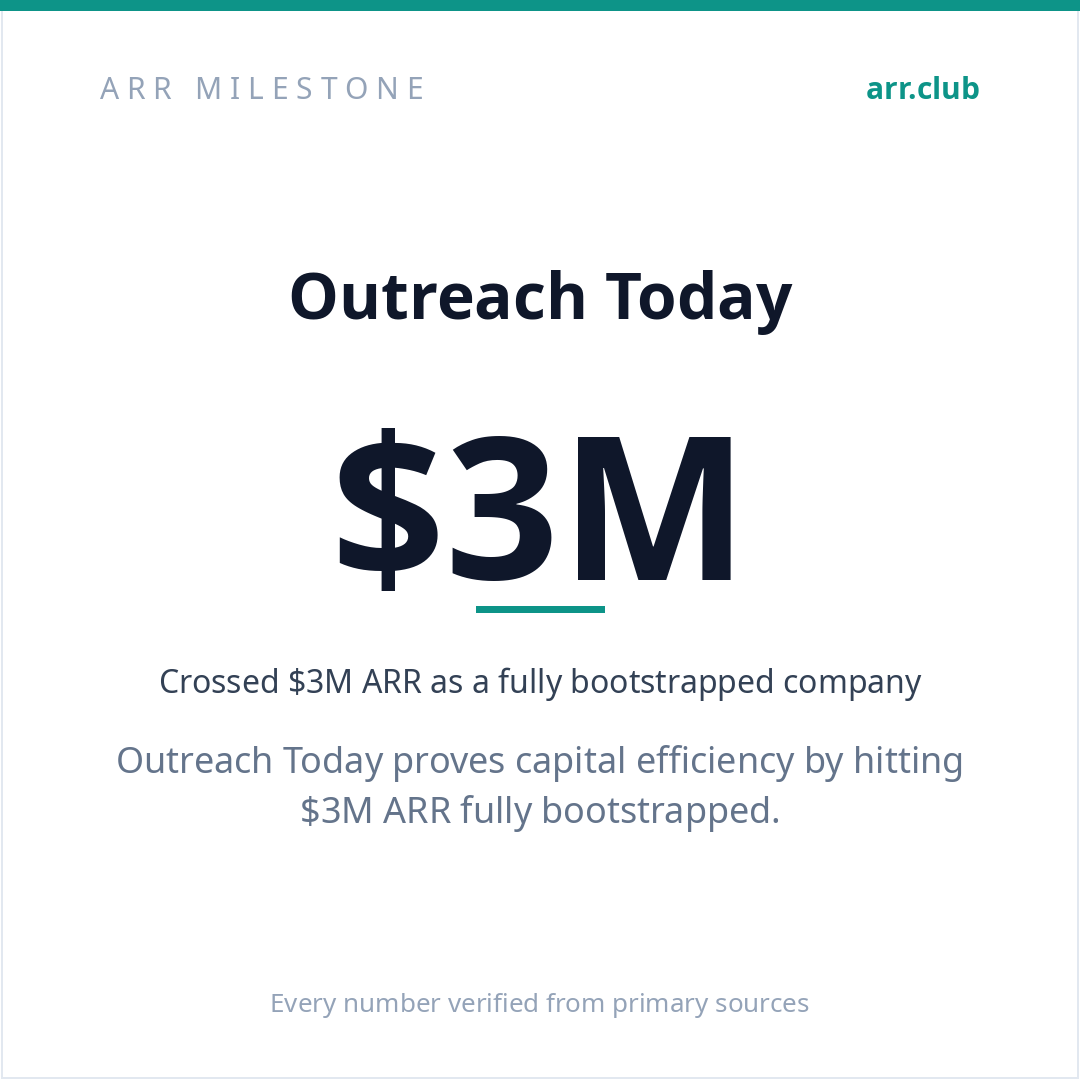
Outreach Today — Outreach Today crossed $3M ARR as a fully bootstrapped company
- ARR:$3M
- 来源:https://www.linkedin.com/posts/nrjshka_%F0%9D%9F%AE%F0%9D%9F%AC%F0%9D%9F%AD%F0%9D%9F%B3-got-my-first-job-at-an-agency-share-7516176192639623169-vWa7/
X(≤280 字符)
Outreach Today crossed $3M ARR.

Max Korolev built this fully bootstrapped after losing his savings and four co-founders in 2024. It is a masterclass in resilience and product-market fit.

Tracked live at arr.club
字符数:213
Outreach Today crossed **$3M** ARR at the beginning of **2026** while remaining fully bootstrapped and **100%** owned. This milestone is a masterclass in resilience, proving that infrastructure-heavy SaaS can scale without external capital if the product-market fit is tight enough.

I have watched many founders struggle with the "co-founder churn" that Max Korolev faced in **2024**, but his ability to pivot from losing all his savings to hitting **$100K** in monthly revenue in **2025** is rare. It confirms my thesis that the current wave of email deliverability tools is not just a trend, but a high-margin engine for lean teams.

Here is what this signal tells us about the current market:

1. Bootstrapping is a viable path for infrastructure plays when you solve a high-pain technical problem like email deliverability.
2. The "founder-only" model is becoming increasingly efficient, as evidenced by Korolev’s journey from launching through Entrepreneurs First in **2023** to reaching **$3M** ARR in just **3** years.
3. Revenue velocity is accelerating for tools that sit directly in the cold outreach stack, as companies prioritize deliverability over vanity metrics.

The shift toward owning the full stack—rather than relying on third-party APIs—is creating massive value for solo founders who can execute on complex backend engineering. I track verified ARR milestones like this daily at arr.club.
数据卡片
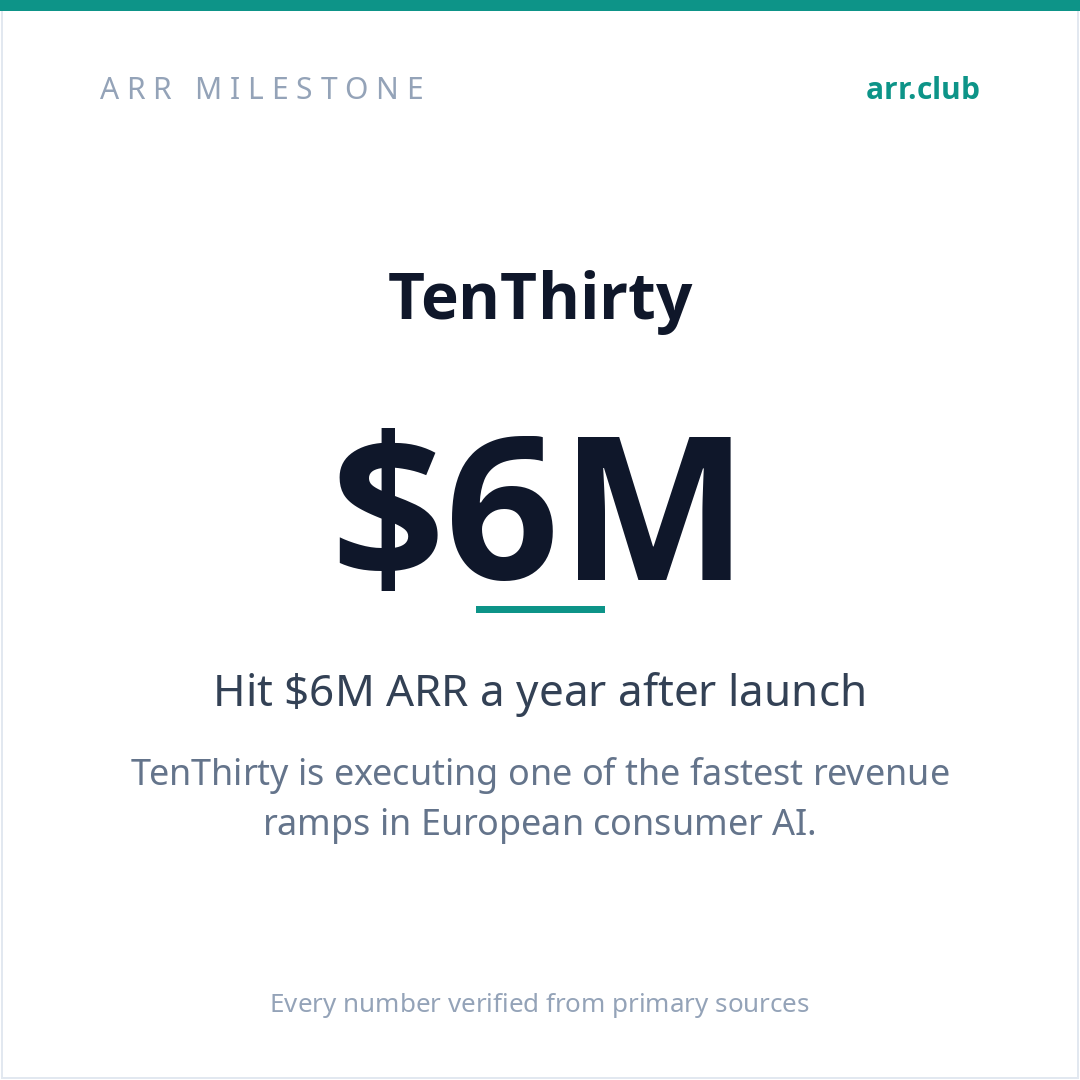
TenThirty — TenThirty hit $6M ARR a year after launch
- ARR:$6M
- 来源:https://www.linkedin.com/posts/jan-oliver-seidenfuss_we-hit-6m-arr-and-are-now-looking-for-a-ugcPost-7516033487460655104-Efw_/
X(≤280 字符)
TenThirty hit $6M ARR just one year after launch.

The team grew from $4.5M ARR in September to $6M in October. This is one of the fastest revenue ramps I have seen in European consumer AI.

Tracked live at arr.club
字符数:215
(生成失败:ValueError: [linkedin_post] ungrounded numbers persist after retry: bold:12)
数据卡片
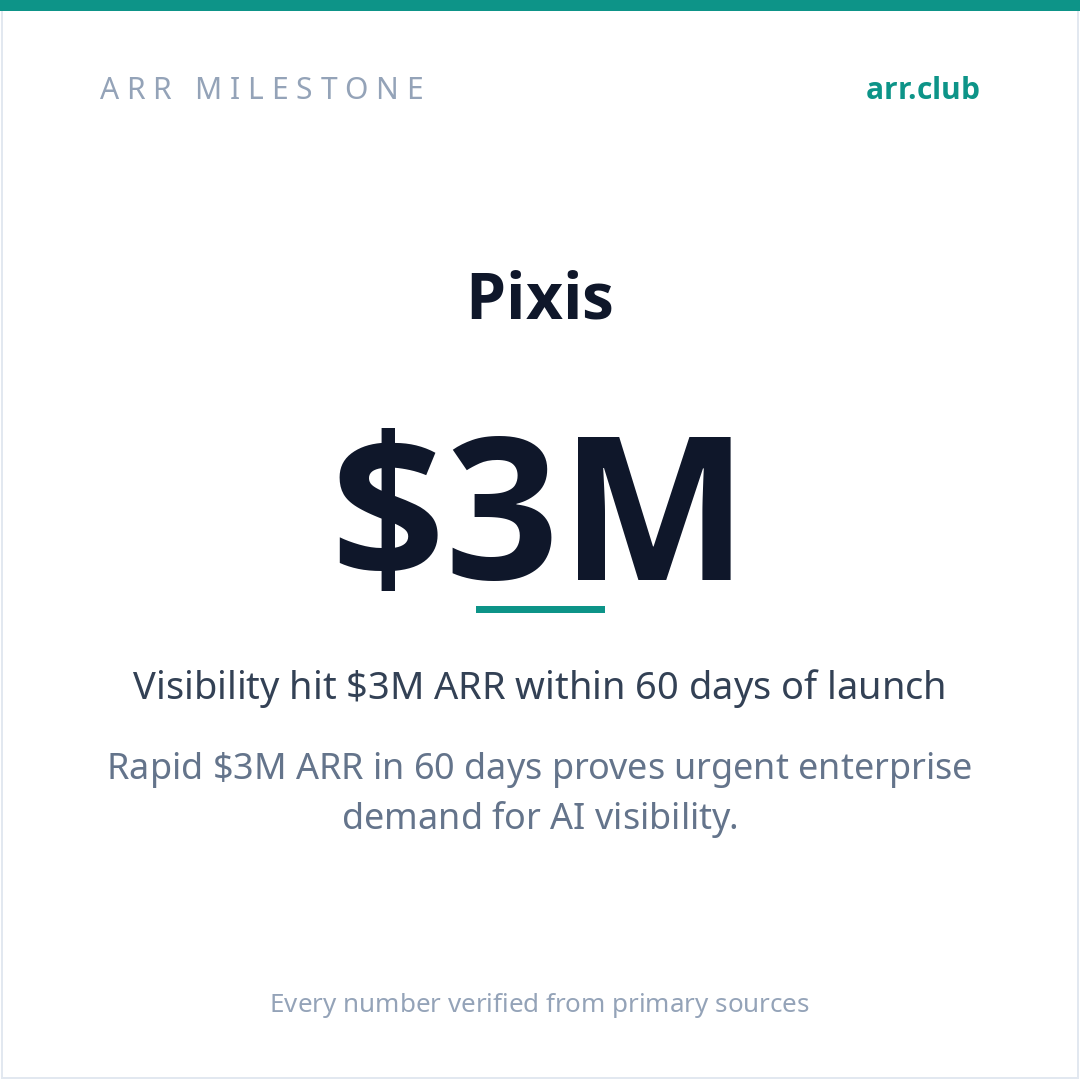
Pixis — Pixis Visibility hit $3M ARR within 60 days of launch
- ARR:$3M
- 来源:https://www.webdisclosure.com/press-release/pixis-visibility-reaches-3-million-in-arr-within-60-days-as-brands-adapt-to-ai-driven-search-3eFBSX9NGFu
X(≤280 字符)
The race for AI-driven search visibility is real. Pixis Visibility hit $3M ARR within 60 days of launch. Brands are desperate to control how they appear in AI answers, and Pixis is capturing that spend immediately.

Tracked live at arr.club
字符数:240
Pixis Visibility reached **$3 million** in ARR within just **60** days of launch. This is a rare velocity for a new product line, signaling that the shift from traditional search to AI-driven discovery is no longer a theoretical concern for brands—it is an urgent budget priority.

I view this as a clear indicator that the "Generative Engine Optimization" category has moved past the experimental phase. When a company can scale to **$3 million** in ARR in **two** months, it proves that the market is desperate for tools that bridge the gap between AI visibility data and automated content execution.

Here is why this matters:

1. Speed to revenue is the ultimate validator of product-market fit in the AI era. By moving from measurement to automated content calendars, Pixis captured immediate demand from brands struggling to influence AI-generated answers.
2. The shift in search behavior is massive. With **34%** of LLM users already relying on these tools for everyday searches, the potential for **$750 billion** in U.S. revenue to move through AI-powered search by **2028** creates a massive tailwind for visibility platforms.
3. Execution beats insight. Clients like Clientell are not just looking for data on how they appear in AI models; they are paying for the ability to push content directly to their CMS without heavy engineering overhead.

I track verified ARR milestones like this daily at arr.club.
数据卡片
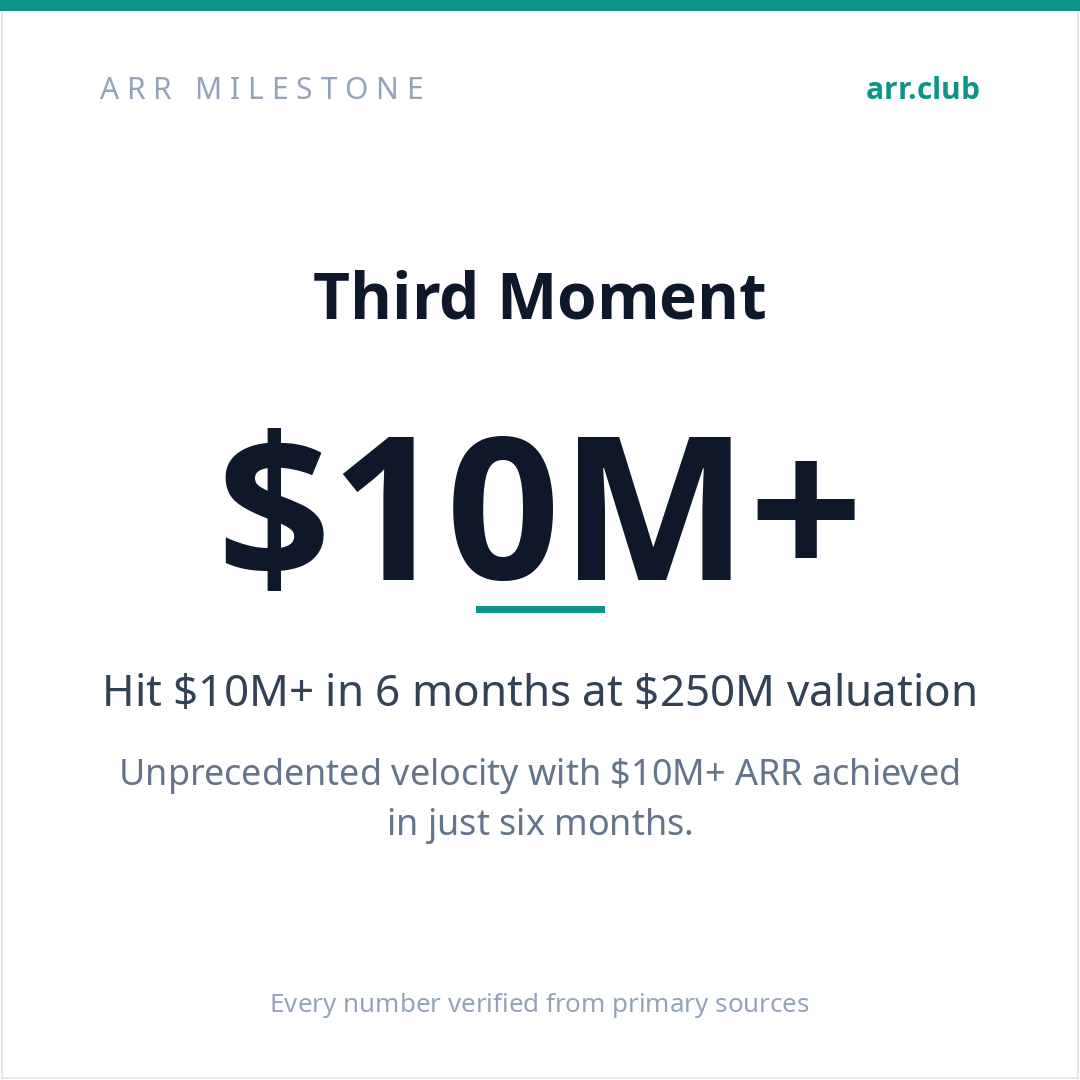
Third Moment — Third Moment hit $10M+ in 6 months at $250M valuation
- ARR:$10M+
- 来源:https://x.com/adamkhakhar/status/2110404262618349975
X(≤280 字符)
Third Moment hit $10M+ ARR in 6 months. They also raised at a $250M valuation.

Velocity is the ultimate moat in the AI infrastructure race. This is a masterclass in execution.

Tracked live at arr.club
字符数:202
Third Moment hit **$10M+** in ARR within just **6** months of founding, securing a **$250M** valuation in the process. This level of velocity is rare, even in the current AI market, and signals a massive appetite for infrastructure that turns production traffic into a compounding data advantage.

The signal here is clear:

1. Speed to revenue is the ultimate validator. Reaching **8**-figure revenue in **6** months proves that enterprises are desperate for AI workflows that move beyond simple API wrappers.
2. The product strategy is dual-layered. By combining OpenAI-compatible inference endpoints with reinforcement learning environments, they are positioning themselves as the essential "picks-and-shovels" for the post-training boom.
3. Market validation is high. With **$10M+** in contracts signed in the last month alone, the company has moved past the experimental phase and into rapid enterprise scaling.

While the inference-optimization layer is becoming increasingly crowded, Third Moment’s focus on the RL-driven post-training wave provides a distinct wedge. They are now moving to scale their team, with plans to hire **15** engineers in the next **45** days to support this growth. I track verified ARR milestones like this daily at arr.club.
数据卡片
早期项目内参 · 2026-10-15
今日供给不足: 过去 7 天仅发现 2 个符合早期标准的项目(融资事件/新增早期公司), 未达到成稿标准,如实报告不硬凑。
建议: 放宽窗口到 14 天, 或叠加外部源 (LinkedIn 融资帖 / X 创始人官宣 / 播客对谈提及)。
每日文章
- `2026-10-15-free.en.md`
- `2026-10-15-free.zh.md`